


- The COR group at ITACA is a partner in the network, funded by Horizon Europe through the Marie Skłodowska-Curie Actions (MSCA Doctoral Networks), which supports doctoral training in the consortium’s laboratories, hospitals and companies
- María Guillem leads Work Package 3, which focuses on developing mechanistic and data-driven decision models to optimise AF treatment
ITACA-UPV is taking part in TrackAF project, a European doctoral training network seeking to improve the long-term prediction, diagnosis and treatment of atrial fibrillation and atrial cardiomyopathy.
Through its Cardiac-Oriented Research (COR) group, the institute will contribute to developing models to understand how these conditions progress and to guide more personalised prevention and treatment strategies.
The initiative is funded by the European Union’s Horizon Europe programme through the Marie Skłodowska-Curie Actions (MSCA Doctoral Networks). Its approach combines the study of the heart at different scales with models that simulate disease mechanisms and methods for analysing data.
Predicting cardiovascular diseases and understanding why it progresses differently in each patient are among the challenges TrackAF addresses.
The project addresses the fact that cardiovascular diseases are the leading cause of death worldwide. Among these, atrial fibrillation (AF) is the most common arrhythmia in clinical practice, and an estimated one in three people in Europe will develop it during their lifetime. Predicting its onset and understanding why it progresses differently in each patient are among the challenges TrackAF addresses.
“Atrial fibrillation presents challenges in prediction, diagnosis and treatment. Making progress requires us to combine disciplines and approaches, and to study how the disease develops in each individual”, says María Guillem, head of COR and Director of ITACA.
Models to guide personalised treatments
María Guillem leads TrackAF’s Work Package 3, which is dedicated to developing decision-support models that combine knowledge of cardiac mechanisms with data analysis to optimise AF treatment.
Its research areas include personalised ablation therapies and modulation of the cardiac autonomic nervous system. Predictive models will also be developed to study how lifestyle factors influence the progression or regression of the arrhythmia.
COR’s contribution draws on its expertise in non-invasive cardiac mapping, advanced processing of electrophysiological signals and the development of digital twins of the heart:
COR’s contribution draws on its expertise in non-invasive cardiac mapping, advanced processing of electrophysiological signals and the development of digital twins of the heart: computational models that enable researchers to study how it functions.
“Combining these tools with decision models can help us better interpret the heart’s electrical activity and provide useful information to guide clinical decisions,” says the Director of ITACA.
A European network connecting science and clinical practice
TrackAF is coordinated by Dr Axel Loewe of the Karlsruhe Institute of Technology (Germany) and brings together 14 European institutions. The consortium includes universities in Maastricht, Zaragoza, Graz and Trento; hospitals such as La Fe Hospital in València and UKE in Hamburg; and companies in the sector, including Corify Care, NumeriCor and FibriCheck.
The network funds the training of doctoral researchers, who will gain experience in the consortium’s laboratories, hospitals and companies. This combination of settings aims to connect research with the needs of clinical practice and support the development of useful tools for prevention and treatment.
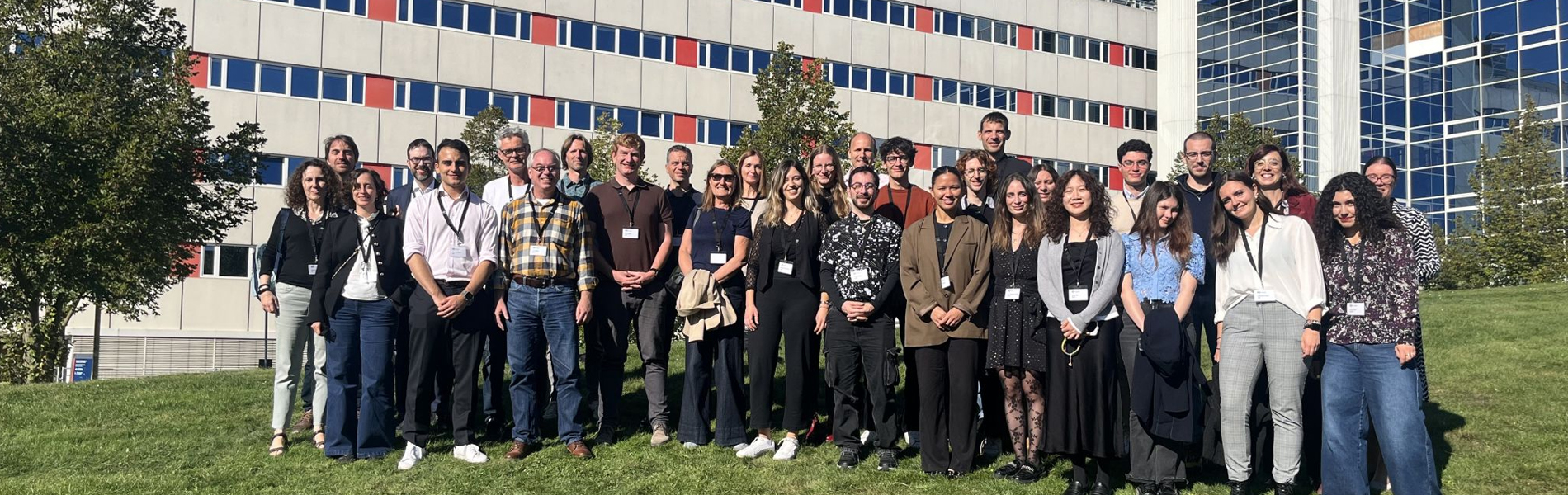
The first in-person meeting of supervisors and doctoral researchers from the participating institutions took place on 6 and 7 October in Maastricht
“Doctoral training in academic, clinical and business settings will enable new researchers to gain different perspectives and work on solutions that address the challenges facing cardiology”, concludes María Guillem.
The first in-person meeting of supervisors and doctoral researchers from the participating institutions took place on 6 and 7 October in Maastricht (the Netherlands), during the TrackAF kick-off meeting.
TrackAF has received funding from the European Union’s Horizon Europe programme under the Marie Skłodowska-Curie Doctoral Networks (HORIZON-MSCA-2024-DN-01), under grant agreement No 101226362.