



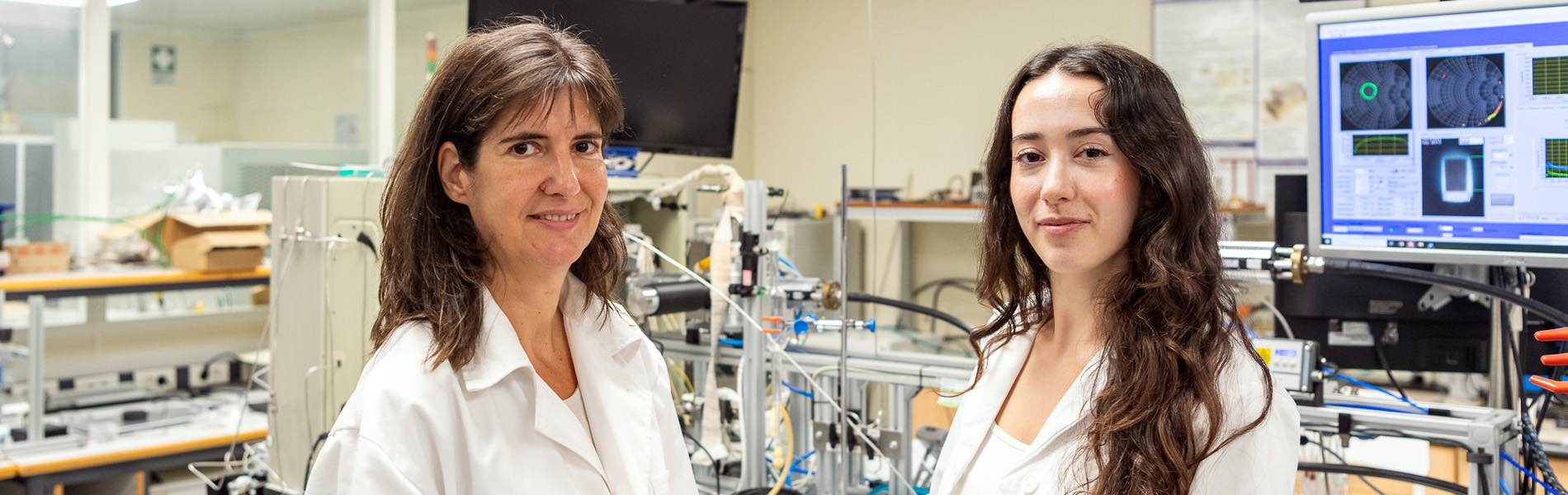
A team from the Universitat Politècnica de València (UPV), from the DIMAS Laboratory at the Institute for Information and Communications Technologies (ITACA), and from the Surrey Space Centre at the University of Surrey has taken another step towards the potential construction of infrastructure on the Moon.
The research group has demonstrated that lunar rocks or regolith are heated more efficiently and rapidly with microwaves than with other traditional methods, such as furnace heating. This breakthrough offers a potential solution for the sustainable construction of roads, airstrips or buildings in situ, using the Moon’s own structural materials without the need to transport them from Earth.
In the study, the researchers analysed different methods for heating, melting, or processing lunar regolith – a material abundant on the Moon’s surface – at high temperatures. This type of rock, once sintered or melted, can be used as a raw material for building infrastructure on the Moon, making it the subject of various research projects for this purpose.
One such approach is to find the most efficient, rapid and sustainable way to process it. Now, the research conducted by the DIMAS-ITACA UPV Laboratory and the Surrey Space Centre confirms that microwave heating could be the most effective solution.
Rocks from different lunar regions
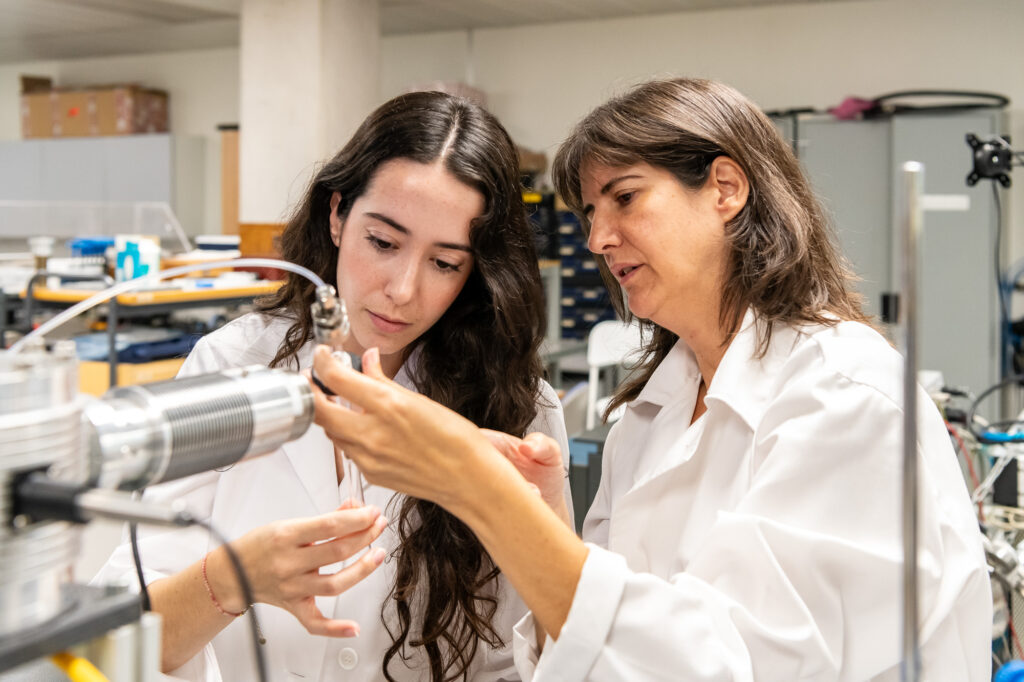
During the study, the characteristics of two lunar rock simulants were analysed: those from the lunar maria and those from the highlands. The aim was to determine their dielectric properties—that is, how much electrical energy they can store and how much they lose during heating. The materials were heated from room temperature to their melting point in a nitrogen atmosphere to prevent contamination from Earth’s atmosphere during the measurements.
The researchers discovered that microwave heating enables regolith to absorb energy more quickly than with traditional methods. This suggests that melting lunar rocks with microwaves improves not only energy efficiency but also process speed, aiming to obtain optimal construction materials.
The mechanisms of microwave heating are very different from those of an oven, as they involve the direct conversion of electromagnetic energy into heat, rather than heat transfer via temperature gradients. As a result, samples heated in a microwave and in an oven may not exhibit the same material state at the same overall temperature. This is why it is so important to understand how different materials behave under different heating methods.
«Understanding how lunar regolith responds to microwave heating is key, as it will enable the design of more efficient and controlled processes for construction on the Moon«, says Beatriz García-Baños, a researcher at the UPV’s DIMAS-ITACA Laboratory.
José Manuel Catalá, director of the DIMAS-ITACA Laboratory and also a researcher on the study, adds that «as well as optimising energy consumption, the microwave heating technique accelerates the process of melting or densifying the regolith, as it heats the material from the inside».
- The study was funded by the Vice-rectorate for Research at the Universitat Politècnica de València (UPV) through a Grant for First Research Projects (PAID-06-24).