

The Institute of Information and Communication Technologies (ITACA-UPV) held a new edition of ITACA-WIICT on Thursday 16 July, an event that recognised the research excellence of its staff.
The awards recognised the best projects developed by the Institute during 2025, the scientific publications with the highest impact factors and best percentile rankings, and researchers’ ability to communicate their findings clearly, rigorously and engagingly.
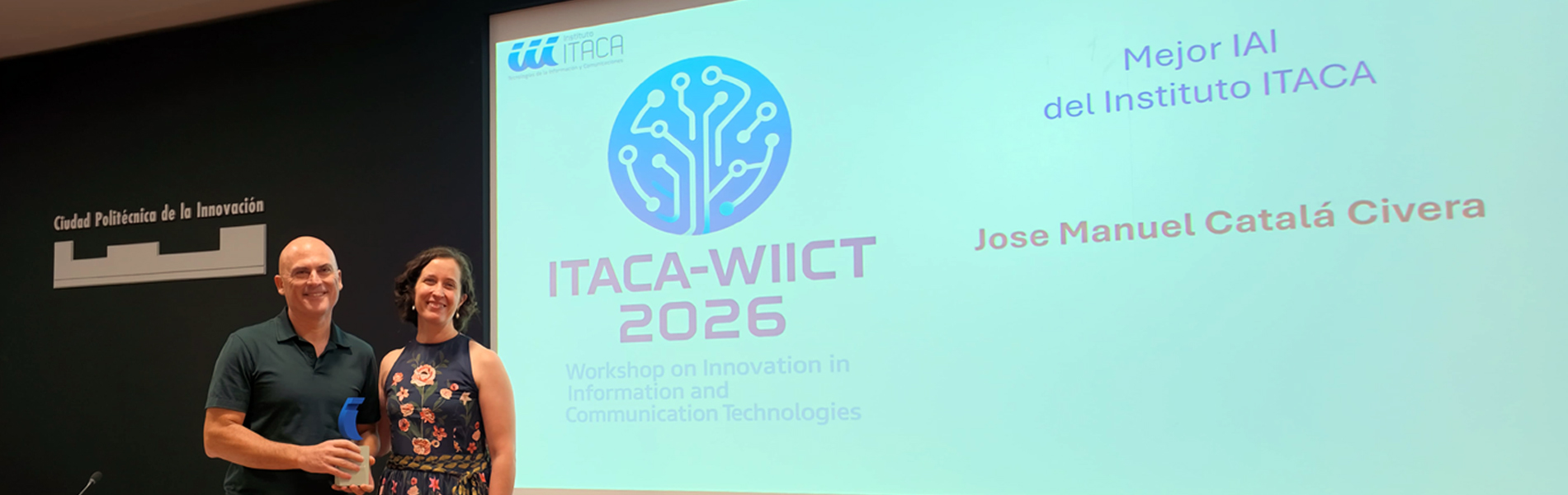
First, José Manuel Catalá Civera, head of the DIMAS-ITACA group, received the Institute’s award for the highest Research Activity Index, an indicator that recognises scientific output, participation in projects and research activity over the past year.
Outstanding projects of 2025
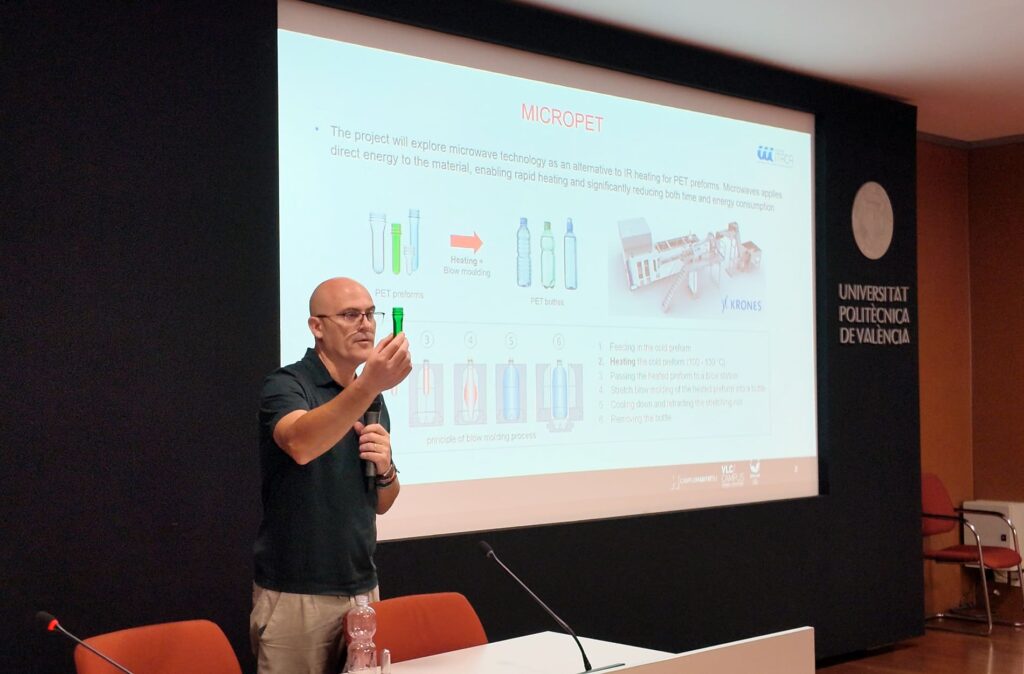
First prize was awarded to José Manuel Catalá Civera, principal investigator of the FLEXHYON project (Flexible Hybrid Electrical Systems for Sustainable Process Intensification On-Demand and Where Required).
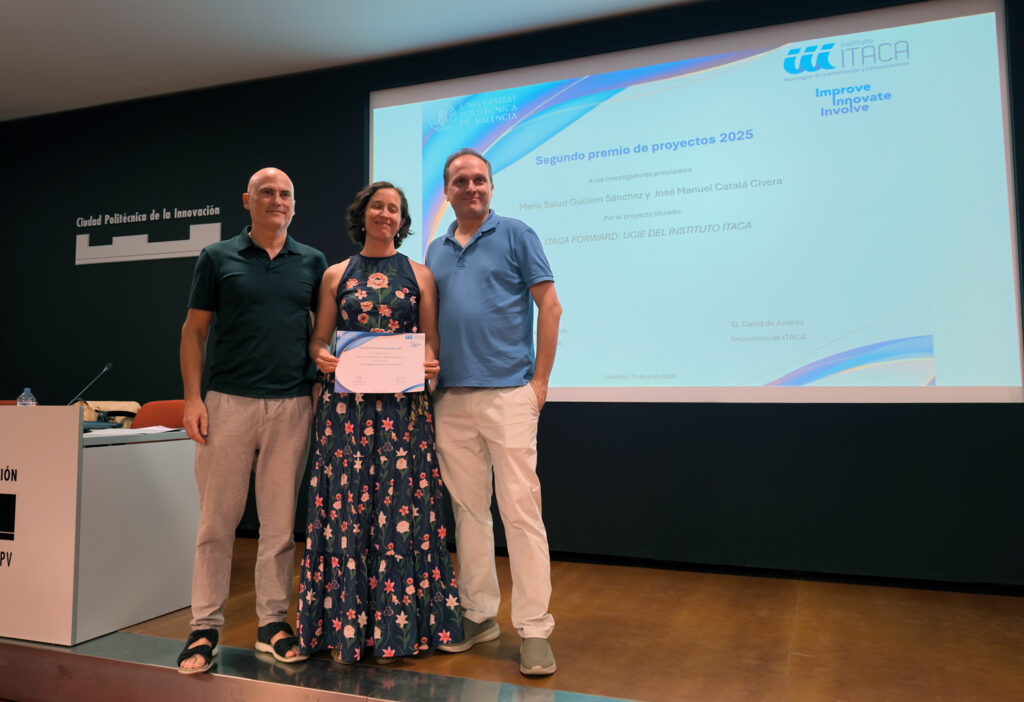
Second prize went to María Salud Guillem Sánchez and José Manuel Catalá Civera, main researchers of ITACA FORWARD: UCIE, an initiative designed to promote innovation, knowledge transfer and the valorisation of the Institute’s research results.
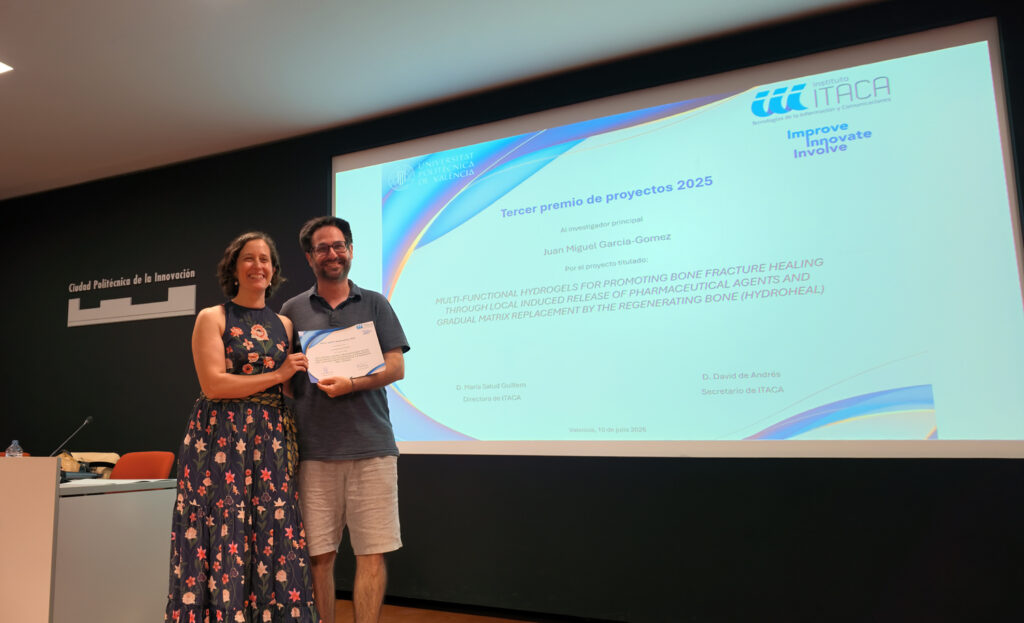
Third prize went to Juan Miguel García-Gómez for the HYDROHEAL project, which focuses on developing multifunctional hydrogels to aid the healing of bone fractures through the localised release of pharmaceutical agents and the gradual replacement of the matrix with regenerated bone.
Recognition for the highest-impact publications
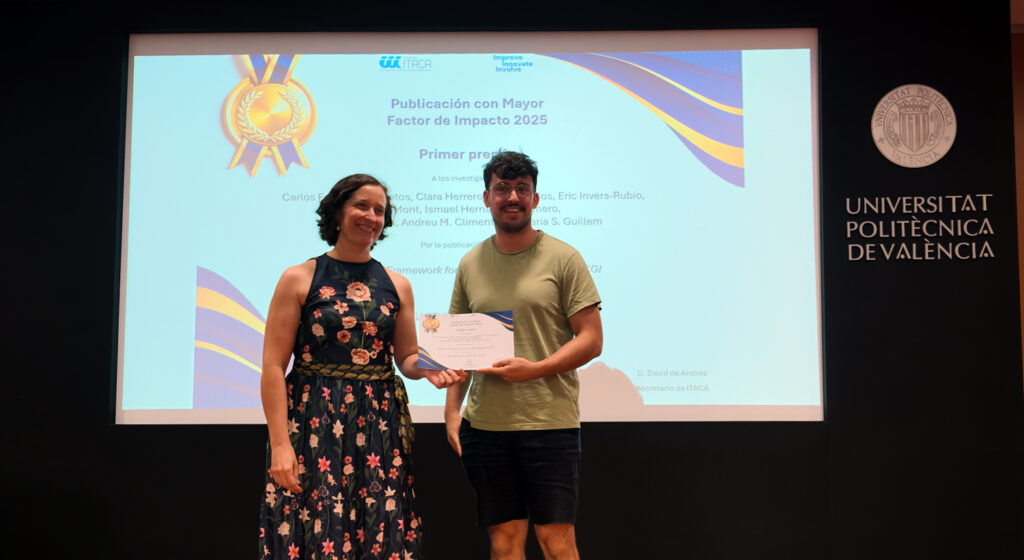
In the highest-impact publication category, first prize was awarded to the paper “Bayesian Framework for Atrial LAT Estimation in ECG”, published in IEEE Transactions on Medical Imaging and authored by Carlos Fambuena-Santos, Clara Herrero, Santiago Ros, Eric Invers-Rubio, Lluís Mont, Ismael Hernández-Romero, Felipe Atienza, Andreu M. Climent and María S. Guillem.
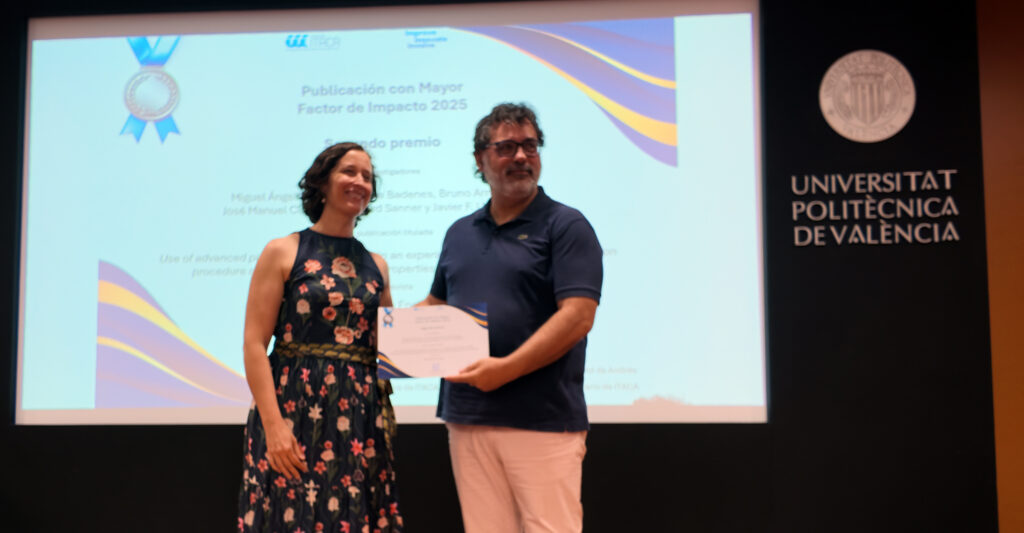
Second prize recognised the paper “Use of advanced pipe and grout materials in an experimental Single-U BHE: Installation procedure assessment and thermal properties comparison using C2RLSM”, published in Renewable Energy and authored by Miguel Ángel Mateo, Borja Badenes, Bruno Armengot, José Manuel Cuevas, Burkhard Sanner and Javier F. Urchueguía
Third prize was awarded to the study “An AI-based microsimulation for predicting health outcomes among people experiencing homelessness”, published in Computer Methods and Programs in Biomedicine and produced by a team including Antonio Blasco-Calafat, Vicent Blanes-Selva, Ascensión Doñate-Martínez and Juan M. García-Gómez.
Publications with the highest percentile rankings
First prize in this category was awarded to the paper “Landscape analysis towards data quality and utility labelling in the European Health Data Space”, published in the European Journal of Public Health and authored by Ángel Sánchez-García, Claudio Proietti Mercuri, Nienke Schutte, Francisco Estupiñán-Romero, Carlos Tellería-Orriols, Ascensión Doñate-Martínez, Juan M. García-Gómez, Enrique Bernal-Delgado and Carlos Sáez.
Second prize recognised Pablo Ferri and Juan Miguel García-Gómez for the paper “Overrepresentation Bias Leads to Performance Overestimation in Blood–Brain Barrier Permeability Prediction Models: Characterization and Mitigation”, published in the Journal of Chemical Information and Modeling.
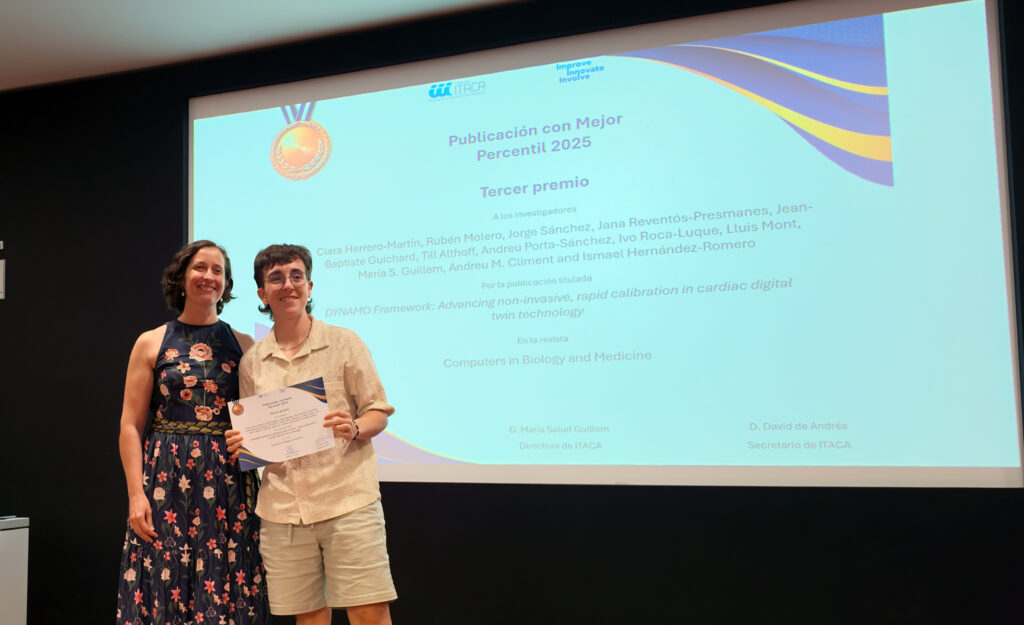
Third prize was awarded to the paper “DYNAMO Framework: Advancing non-invasive, rapid calibration in cardiac digital twin technology”, published in Computers in Biology and Medicine and authored by Clara Herrero-Martín, Rubén Molero, Jorge Sánchez, Jana Reventós-Presmanes, Jean-Baptiste Guichard, Till Althoff, Andreu Porta-Sánchez, Ivo Roca-Luque, Lluís Mont, María S. Guillem, Andreu M. Climent and Ismael Hernández-Romero.
Raquel Monllor wins best Golden Minute presentation
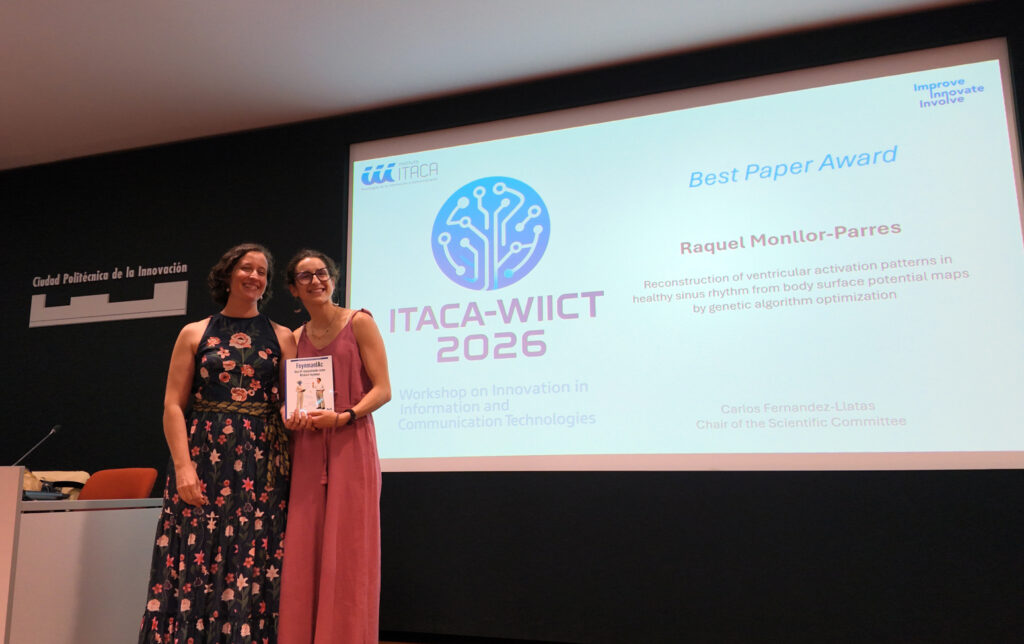
The event also recognised Raquel Monllor, a researcher in the COR-ITACA group, with the award for the best presentation of a study during the “Golden Minute”.
The COR researcher presented the paper Reconstruction of ventricular activation patterns in healthy sinus rhythm from body surface potential maps by genetic algorithm optimization, which focuses on the non-invasive reconstruction of ventricular electrical activation patterns using body-surface potential maps and genetic algorithms.