




Juan Carlos Ruiz, researcher from the Fault-Tolerant Systems (FTS) group at the ITACA Institute of the Universitat Politècnica de València (UPV), is the lead organiser of SafeComp 2026. In this interview, he explains why safety is essential in a world that is increasingly dependent on computer systems. The 45th edition of the conference, to be held in Valencia from 22 to 25 September, will bring together international specialists in safety, reliability and critical systems in Spain for the first time. Artificial intelligence, sustainability and technology certification will be among the main topics addressed at the event.
- What does hosting SafeComp 2026 in Spain for the first time mean for ITACA and the UPV?
It represents international recognition of three decades of sustained work in a field which, although largely invisible to the general public, underpins much of the functioning of the modern world. For 30 years, within the “Fault-Tolerant Systems” (SFT) group at the UPV’s ITACA Institute, we have worked on the reality that computer systems are subject to permanent and transient accidental faults, which can cause errors and, under certain circumstances, lead to critical failures.
Our work consists of preventing this chain of events from leading to unacceptable consequences, such as loss of life, environmental disasters, or severe economic damage.
It is important to distinguish functional safety (safety) from cybersecurity (security). Our work focuses on ensuring that when an accidental fault occurs, the system can respond.
This is why SafeComp brings together specialists in functional safety from sectors such as aviation, power plants, medical robotics, and space exploration, where incorrect operation must be tolerated or mitigated to ensure safety is not compromised.
It is important to distinguish functional safety (safety) from cybersecurity (security). Data confidentiality or privacy alone does not guarantee that a machine will operate safely. Our work focuses on ensuring that when an accidental fault occurs, the system can respond safely.
At ITACA, we contribute to this field through deliberate fault-injection techniques, which enable us to stress-test computing solutions before they are put into service. This enables us to obtain quantitative measurements of their reliability, identify weaknesses and develop fault-tolerance mechanisms.
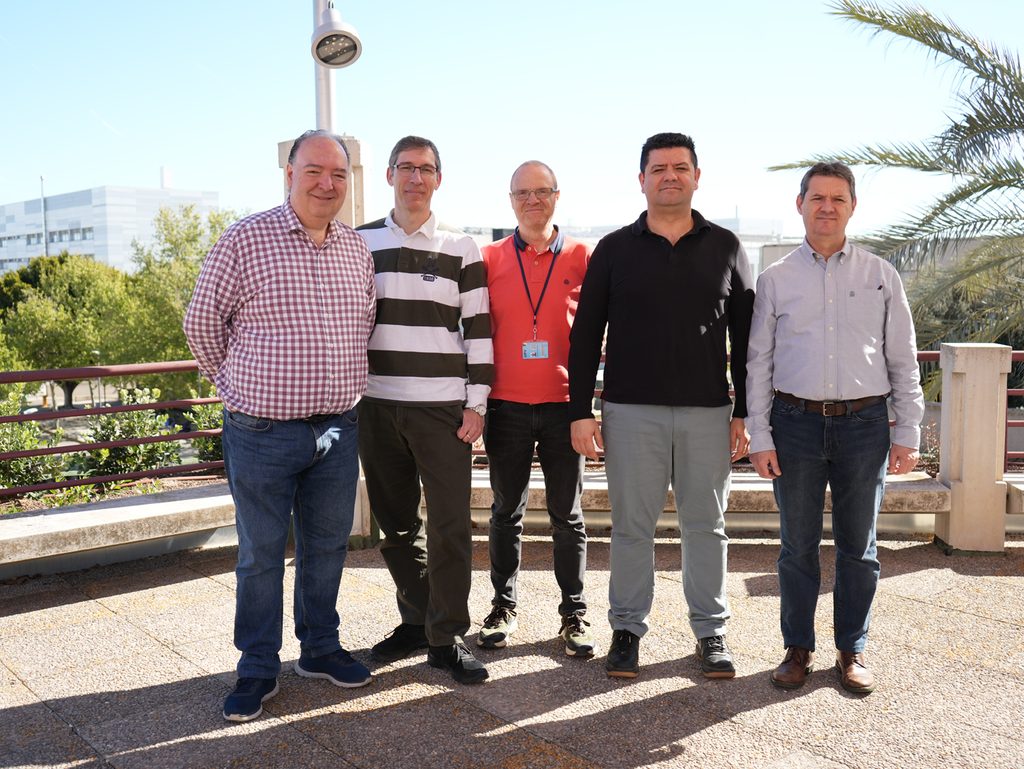
Assessing, mitigating, and empirically demonstrating the safety of a system are essential to the certification processes that enable these technologies to be deployed in real-world environments.
The heart of our discipline is studying abnormal operation, assessing its consequences and developing mechanisms that enable safety to be maintained
- Why is SafeComp currently regarded as a leading conference on critical and dependable systems?
Because while much of the technology industry focuses on showcasing what technology does well, the SafeComp community asks what happens when it fails. That lies at the heart of our discipline: studying abnormal operation, assessing its consequences and developing mechanisms that enable safety to be maintained.
Over the years, the conference has gained recognition in scientific excellence rankings such as CORE and has established itself as a meeting point between research and industry. It is not simply about presenting new solutions, but also about providing evidence of their reliability and safety.
At a time when society is entrusting increasingly important decisions to computer systems and algorithms, this rigour is essential in distinguishing between a promising innovation and a technology that may still pose unacceptable risks.
- In which aspects of our everyday lives do we already depend on critical systems without being aware of it?
In far more areas than we might imagine. We tend to associate critical systems with commercial aviation or nuclear power plants, but our technological dependence extends to many everyday services.
In a city such as Valencia, where temperatures can become extremely high during the summer, a prolonged failure of air conditioning in a hospital or home can pose a health and safety risk
A computer failure in the banking sector can bring commercial transactions to a standstill; an outage affecting cloud services can disrupt connected devices, locks or air-conditioning systems. We also depend on control systems in hospitals, electricity grids, transport networks and other essential infrastructure.
In a city such as Valencia, where temperatures can become extremely high during the summer, a prolonged failure of air conditioning in a hospital or home can pose a health and safety risk. Society tends to remember the importance of these systems when they stop working; our job is precisely to anticipate that moment.
- This year’s theme focuses on safe and sustainable systems. How can these two goals be made compatible?
Sustainability must be approached pragmatically. The development and operation of artificial intelligence models require infrastructure that consumes considerable amounts of energy and water. We cannot demand increasingly powerful systems without taking their environmental impact into account.
This means improving the efficiency of data centres and addressing the energy debate without dogma. In this context, the role of nuclear energy as a source of continuous, low-emission power is also being reassessed, alongside other alternatives, in order to meet growing electricity demand.
In our field, the aim is to maximise efficiency per watt without compromising functional safety. Sustainability cannot be achieved at the expense of reducing the safety margins of systems that depend on people and critical infrastructure.
Artificial intelligence is a formidable performance accelerator, but it also introduces new challenges
- What role is artificial intelligence playing in the development of critical systems?
Artificial intelligence is a formidable performance accelerator, but it also introduces new challenges. Critical systems engineering requires predictable behaviour and safety guarantees, while certain AI models can produce responses that are difficult to anticipate or fully verify.
For this reason, the objective should not be to give them absolute control, but rather to integrate them into architectures that incorporate monitoring and protection mechanisms. We need what we might call deterministic “emergency brakes”: control layers that constrain algorithmic decisions and ensure that, even when AI proposes an incorrect response, the machine remains within safe operating limits.
The question is not simply what AI can do, but how we can demonstrate that its use does not introduce unacceptable risks.
SafeComp is a forum for sharing knowledge, anticipating risks and contributing to the development of the safety criteria and standards that the technologies of the coming years will require.
- What opportunities does SafeComp 2026 offer researchers, companies and regulatory entities?
It offers them the opportunity to sit around the same table before problems arise in the real world. Research often moves ahead of industry, while regulation needs time to adapt to technological change.
SafeComp 2026 in Valencia will provide a meeting point where academia contributes scientific rigour, companies bring experience from real-world applications, and regulatory bodies provide the regulatory framework. This dialogue is fundamental to ensuring that new technologies can be developed and deployed with the appropriate safeguards.
Ultimately, it is a forum for sharing knowledge, anticipating risks and contributing to the development of the safety criteria and standards that the technologies of the coming years will require.