



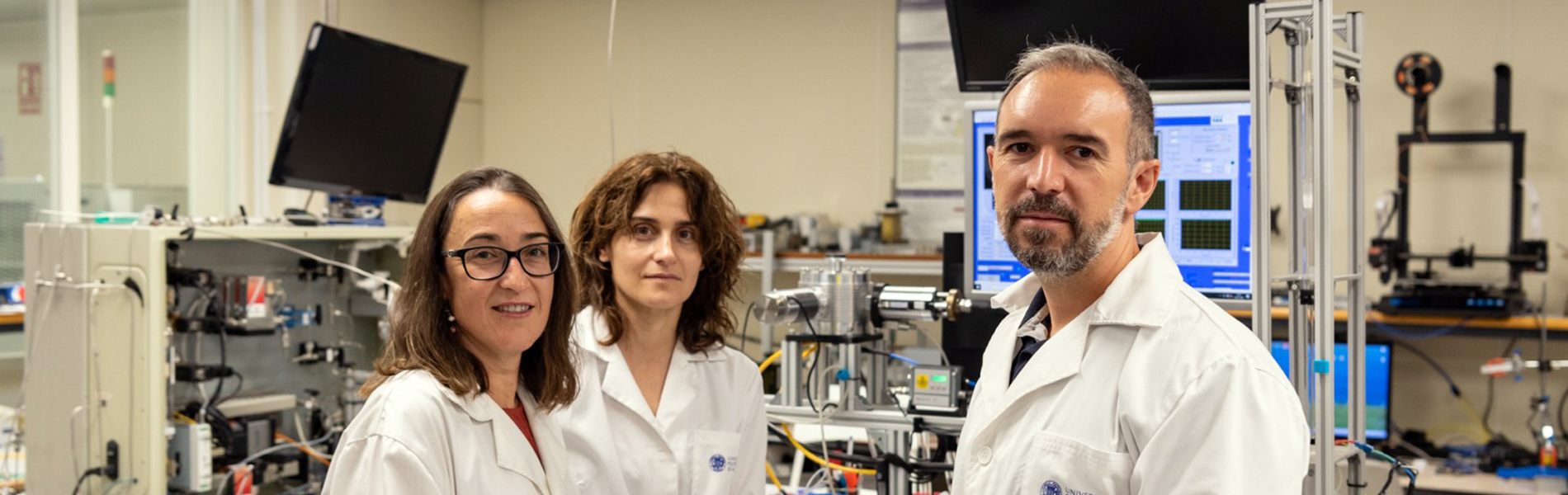
A team from the Universitat Politècnica de València (UPV), with researchers of the DIMAS group at the ITACA Institute, led by Jose Manuel Catalá Civera, and from the Institute of Chemical Technology (ITQ), a joint centre of the Spanish National Research Council (CSIC) and UPV, led by Jose Manuel Serra, has developed a system that produces clean hydrogen from methane more efficiently than conventional processes by using microwave energy.
The system can also transform the resulting carbon into nanomaterials with technological applications in sectors such as electronics. Their work has been published in the journal ACS Sustainable Chemistry & Engineering. In their study, the UPV and CSIC research team shows that microwave energy can activate the chemical reaction needed to produce clean hydrogen at much lower temperatures than those required by conventional systems.
In tests, the researchers achieved methane conversions of up to 80% at just 500 °C -around half the temperature required for methane decomposition using conventional methods, which typically operate above 900–1,000 °C- while maintaining 100% selectivity towards hydrogen production.
Unlike conventional methods, which heat the entire reactor, microwaves focus the energy directly on the catalyst. This reduces energy losses and makes the process more compatible with electricity from renewable sources.
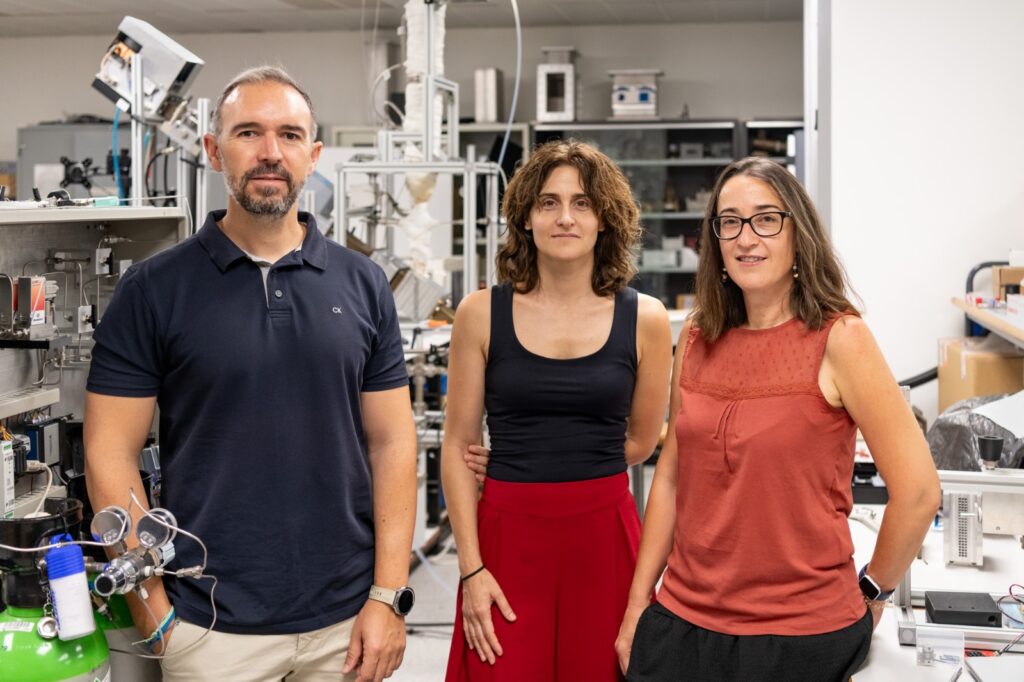
“Most hydrogen produced worldwide today comes from natural gas via processes that release large amounts of carbon dioxide. Our technology also uses methane, but converts it into hydrogen and solid carbon using microwaves, avoiding direct CO2 emissions and significantly reducing the energy required for the reaction. Lower energy consumption, lower operating costs and greater process efficiency: these are the three main advantages of our system,” summarises Alfonso Carrillo, a researcher at ITQ.
Putting the carbon to use
In addition, with the system developed by the ITACA-ITQ team, the carbon generated during the reaction does not become waste.
In their work, the researchers produced different carbon nanostructures, including nanofibres and other high-value carbon nanostructures, which are used as components in batteries, supercapacitors, composite materials for the transport industry, sensors, electronic devices and energy storage systems.
“Our aim was not simply to produce hydrogen, but to do so through a more efficient process that reduces energy consumption and turns carbon into a useful resource rather than releasing it into the atmosphere. And that is exactly what the technology we have developed in our laboratories enables us to do, as a result of more than five years of work”, concludes Jose Daniel Gutiérrez Cano, a researcher at ITACA.