

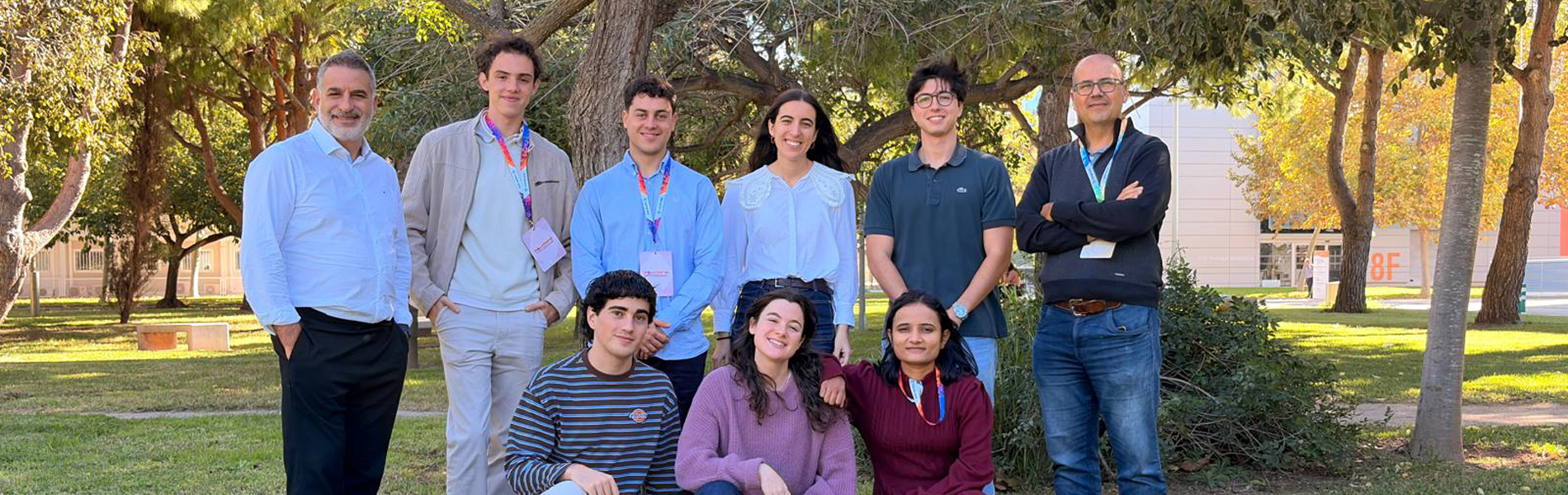
- Researchers from the UPV Institute presented advances in arrhythmia diagnosis, digital twins and clinical monitoring, and took part in scientific sessions as experts and chairs.
The Institute of Information and Communication Technologies (ITACA) at the Universitat Politècnica de València (UPV) played a prominent role in the 44th Annual Congress of the Spanish Society of Biomedical Engineering (CASEIB 2026), held at the UPV from 11 to 13 November.
Under the theme “Science, Technology and Innovation to Transform Health”, the event brought together researchers, healthcare professionals and industry representatives to present the latest advances in biomedical engineering, exchange knowledge and promote new opportunities for collaboration and technology transfer.
ITACA contributed at least nine scientific presentations covering areas such as cardiac electrophysiology, artificial intelligence, biomedical signal processing, digital twins and clinical monitoring, highlighting the breadth of its research and its applications in healthcare.
Artificial intelligence and new tools for cardiac diagnosis
A significant proportion of the research presented focused on developing new tools to improve the diagnosis and treatment of arrhythmias through artificial intelligence, signal processing and computational simulation.
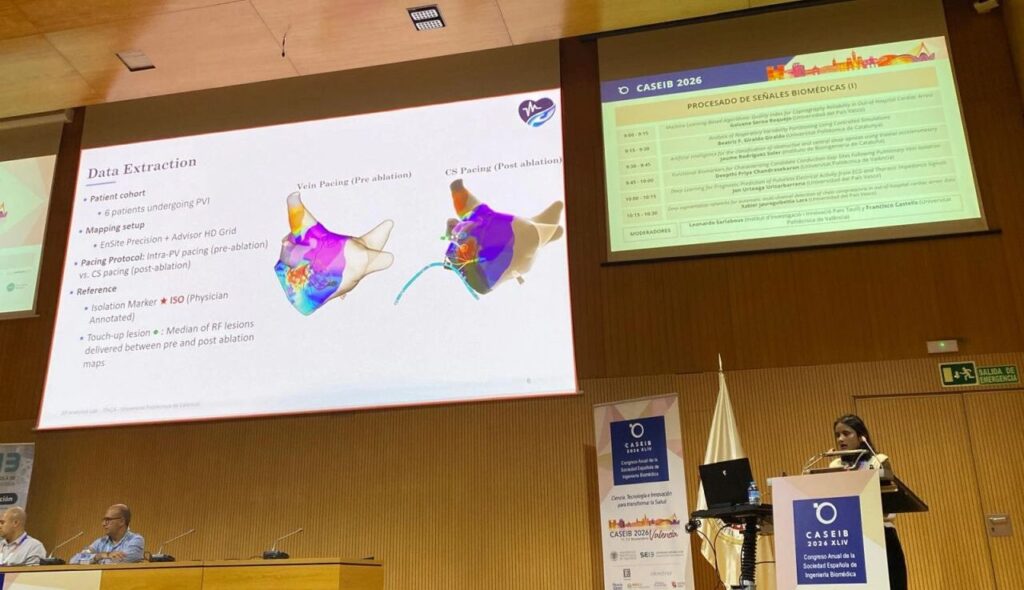
Representing the EP Analytics Lab group, Deepthi Priya Chandrasekaran presented research on functional biomarkers to characterise electrical conduction abnormalities following pulmonary vein isolation; Alonso del Pozo Tobajas addressed the detection of ventricular fibrosis using machine learning techniques; and Pablo Santamaría Manzano described an in silico simulation methodology for generating ventricular re-entry datasets.
Alejandro López Lamata also presented work conducted with Andrea Hernández Silva on predicting epicardial signals from endocardial recordings using deep learning, while Rafael Ortega López-Sánchez introduced a method for identifying substrates associated with ventricular tachycardia using deep contrastive neural networks.
Elisa Ramírez Candela, meanwhile, presented a poster on research by Anfal Mallik focused on developing a MATLAB-based tool to digitise paper electrocardiograms and reconstruct the vectorcardiogram.
Together, these contributions demonstrate the potential of computational technologies and artificial intelligence to improve the characterisation of cardiac rhythm disorders and develop tools to support clinical diagnosis.
Digital twins and new technologies for clinical monitoring
The COR (Cardiac Oriented Research) group also made a significant contribution, presenting two studies focused on non-invasive cardiac diagnosis and the development of personalised digital twins.
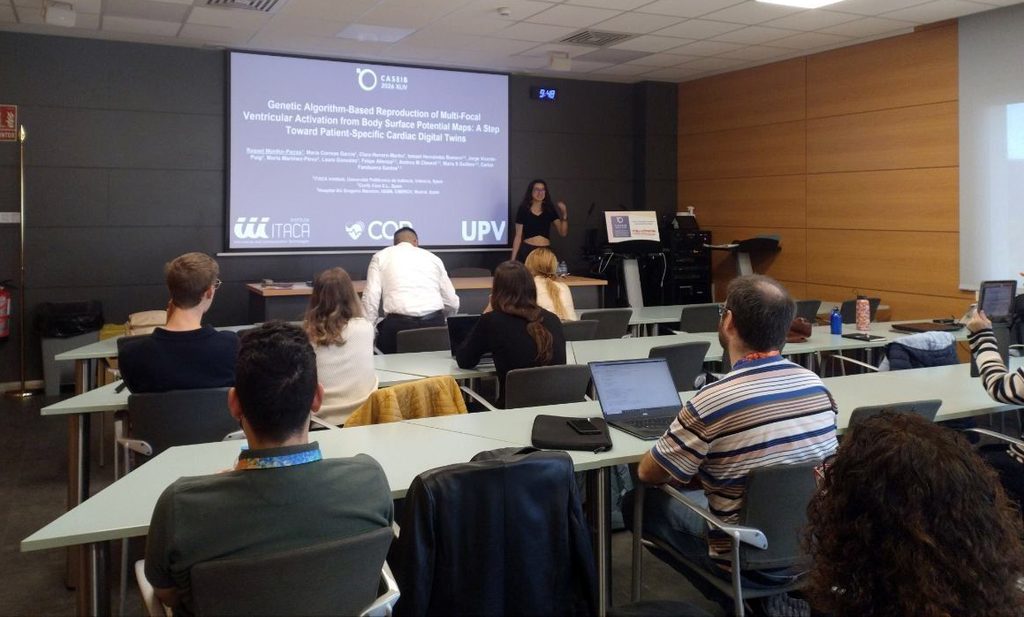
Gemma Lucas Salido demonstrated how a volumetric approach can locate septal atrial ectopic beats, a blind spot for surface ECGI, while Raquel Monllor explained her research into reconstructing ventricular electrical activation using only signals recorded from the surface of the torso, marking a step towards patient-specific cardiac digital twins.
In the field of clinical monitoring, Juan Navarro Sevilla, a researcher at the La Fe Health Research Institute, presented a study conducted with Antonio Martínez Millana, Deputy Director of ITACA, and Esther del Arco Fuster (UPV), comparing non-invasive optical signals with invasive arterial recordings in intensive care patients.
The research seeks to establish the potential and limitations of these technologies for blood pressure monitoring, contributing to the development of new clinical monitoring tools.
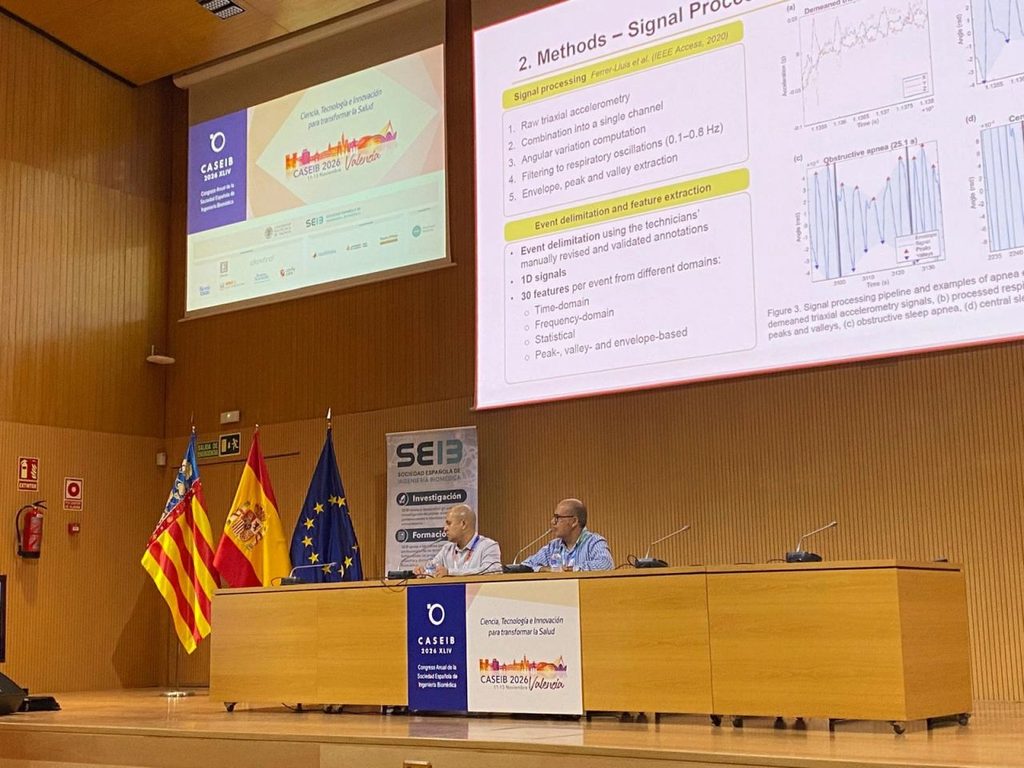
Prominent involvement in scientific sessions and discussions
Beyond the presentations, ITACA researchers, including Vicente Traver, Francisco Castells, José Millet and María Guillem, played an active role in the scientific programme, chairing sessions and contributing as experts to various discussions.
ITACA’s broad representation at CASEIB 2026 highlights its research capabilities and its commitment to developing technologies that improve people’s health and quality of life, helping to advance more precise, personalised and less invasive medicine.