

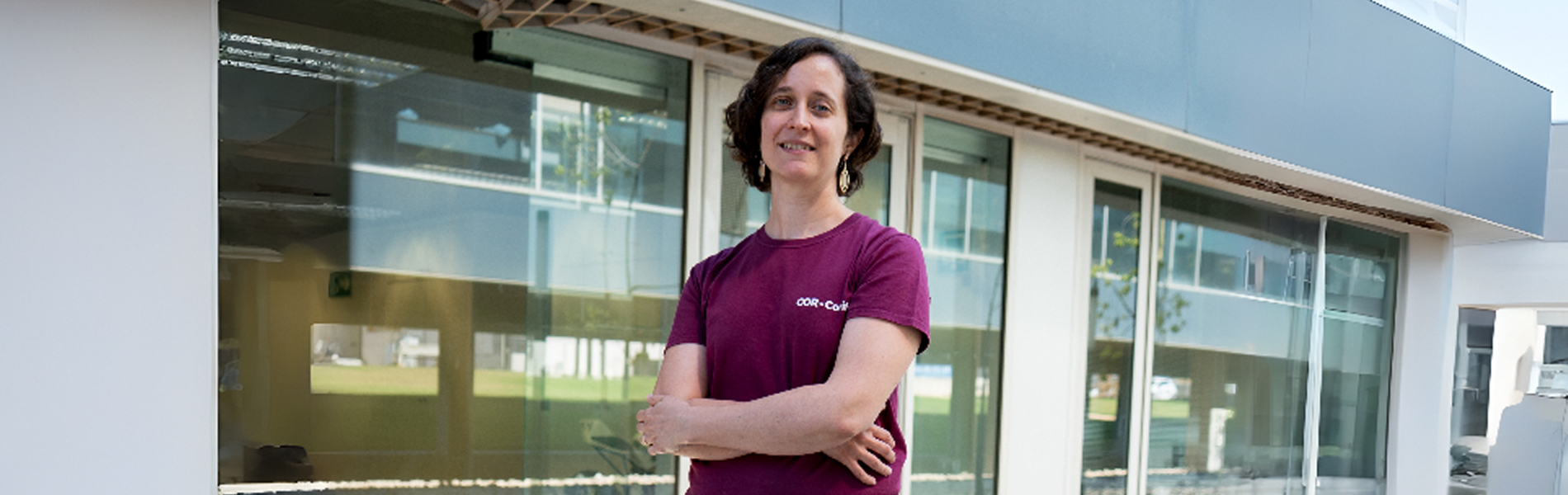
In this interview, María Guillem, Director of the ITACA Institute and Local Chair of the conference, tells us the main objectives of the third edition of the ECGI Summit 2026, the latest news of the programme and the importance of bringing the international scientific community working in this field together in València.
- What does it mean for the COR-ITACA group to host ECGI Summit again and bring leading international researchers together in València?
For us, it is a mix of pride and a responsibility. The first Summit was held in València in 2023, and returning home after the Kraków edition gives us the opportunity to welcome the electrocardiographic imaging community once again. It is strange to bring together engineers, mathematicians, clinicians and companies who would normally only cross paths through research papers or broader conferences.
For us, this congress is an opportunity to exchange ideas with leading experts in electrocardiographic imaging
For a group like ours, working at the interface between engineering and clinical practice, it is also an opportunity to exchange ideas with leading experts in the area and to show our students and doctoral researchers the scope of this discipline.
- Artificial intelligence and cardiac digital twins are two of the main themes of the event. How can these technologies help improve the diagnosis and treatment of arrhythmias?
Each tool brings something different. Artificial intelligence helps us extract information from complex signals more quickly and reliably, for example by identifying abnormal tissue from recordings taken on the surface of the torso or by assessing signal quality. Digital twins allow us to build a personalised model of each patient’s heart and test how different treatments might work before applying them.
Together, they point towards more predictive and less invasive medicine: a better understanding of where and how to intervene, and the likelihood of success. Further validation is still needed, but the direction is very promising.
The firsts barriers in our area is that clinicians need robust evidence, based on real-world data that can be compared across centres, that these tools are reliable.
- One of the main challenges in biomedical research is translating scientific advances into hospital practice. What barriers need to be overcome for non-invasive electrocardiographic imaging to be used more widely in clinical settings?
The first is validation: clinicians need robust evidence, based on real-world data that can be compared across centres, that these tools are reliable. The second is integration into hospital workflows: the technology needs to be fast and user-friendly, and its results must be explainable, particularly when artificial intelligence is involved. The third is navigating the regulatory pathway and working with industry.
In this respect, the FDA’s recent recognition of Corify Care, a UPV spin-off and conference sponsor, demonstrates that this pathway is possible. Summits like this help by bringing together the people who need to work together to make it happen.
- The programme includes the ECGI Community Data Challenge 2026. What does this initiative involve?
It is a challenge open to the entire community, in which teams can demonstrate their ECGI workflows and compare them with those of other groups using the same centralised dataset. The idea is that working with identical data makes it possible to compare methods fairly, which is often not possible in published research.
The winners will be announced during the Summit, and participants will present their work on the final day. Beyond the competition, our aim is to foster collaboration and generate new ideas among the participating groups.
We hope for new collaborations with other research groups, hospitals and companies, leading to joint projects
- As head of the COR-ITACA group and Local Chair of the conference, what impact do you hope this event will have on the group’s international profile?
We hope it will consolidate València’s position as a leading centre for electrocardiographic imaging and raise the profile of our team’s work, particularly that of our early-career researchers, who will have the opportunity to present and discuss their results with colleagues from around the world.
We also hope for new collaborations with other research groups, hospitals and companies, leading to joint projects. Above all, however, we want the Summit to help this technology reach clinical practice sooner and more effectively. That is what drives us as a group.
ECGI Summit 2026 is sponsored by the Regional Ministry of Education, Culture and Universities of the Generalitat Valenciana, through its grant programme supporting the organisation and dissemination of international scientific, technological, humanities and arts conferences, seminars and meetings (CIAORG/2026/080). It also receives support from the EPICA+ grant (PID2023-149812OB-I00), funded by MCIN/AEI/10.13039/501100011033 (Spanish State Research Agency) and the European Regional Development Fund (ERDF), EU.