



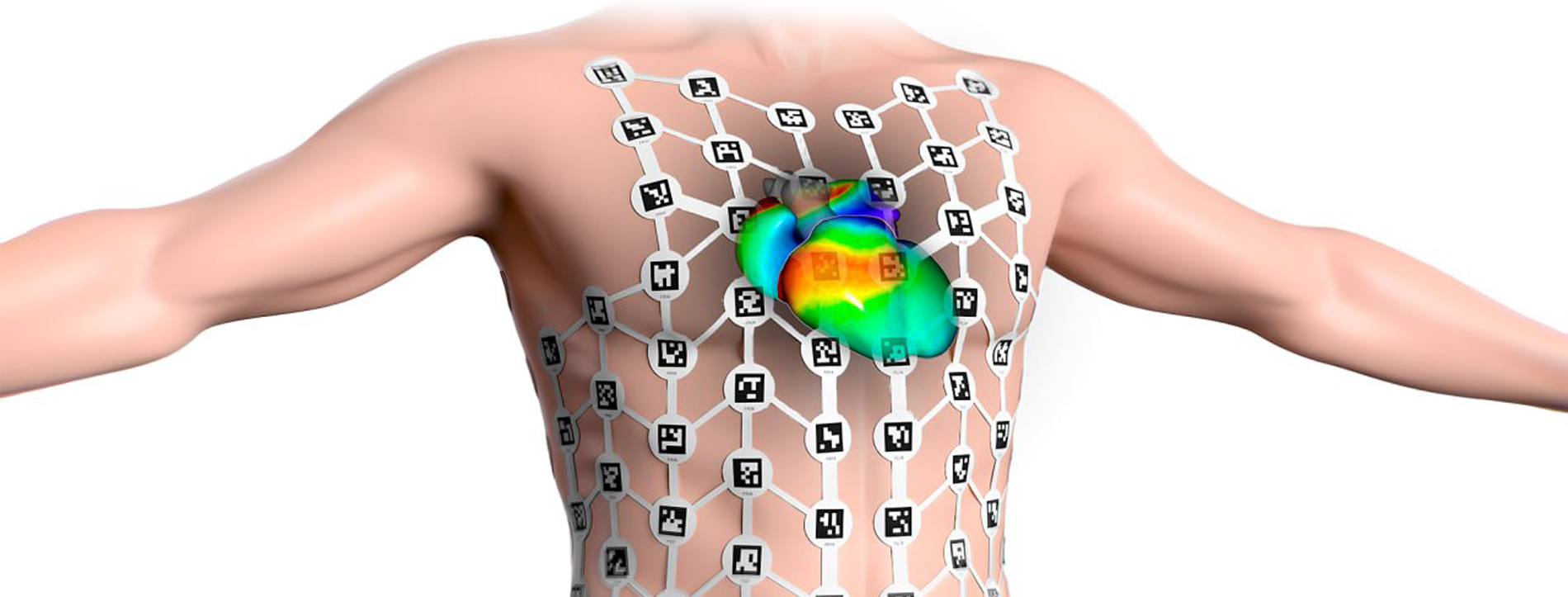
Rubén Molero, researcher from the COR Group-ITACA Institute, has published groundbreaking research that could significantly improve the way we diagnose and treat atrial arrhythmias.
The study, titled «Improving electrocardiographic imaging solutions: A comprehensive study on regularization parameter selection in L-curve optimization in the Atria», was conducted in collaboration with the Hospital Clínic de Barcelona.
Electrocardiographic Imaging (ECGI) is a cutting-edge, non-invasive technique that provides detailed maps of the heart’s electrical activity. However, the accuracy of these maps depends on choosing the right regularization parameters.
For this reason, the researchers have developed a new method to select these parameters more effectively, even in the presence of electrical noise and geometrical uncertainties.

“Our approach allows clinicians to produce more reliable ECGI solutions, improving diagnosis and treatment outcomes for atrial fibrillation and other cardiac arrhythmias”, explains Dr. Rubén Molero, first author of the paper.
The work, developed by Rubén Molero, Marta Martínez, Clara Herrero, Jana Reventós, Ivo Roca, Lluís Mont, Andreu Climent and María S. Guillem, has been shown to offer more personalised and effective treatments.
‘The methodology has been validated using simulations and real patient data. The results could transform the way ECGI is used in clinical practice and improve the treatment of arrhythmias», say the researchers.