



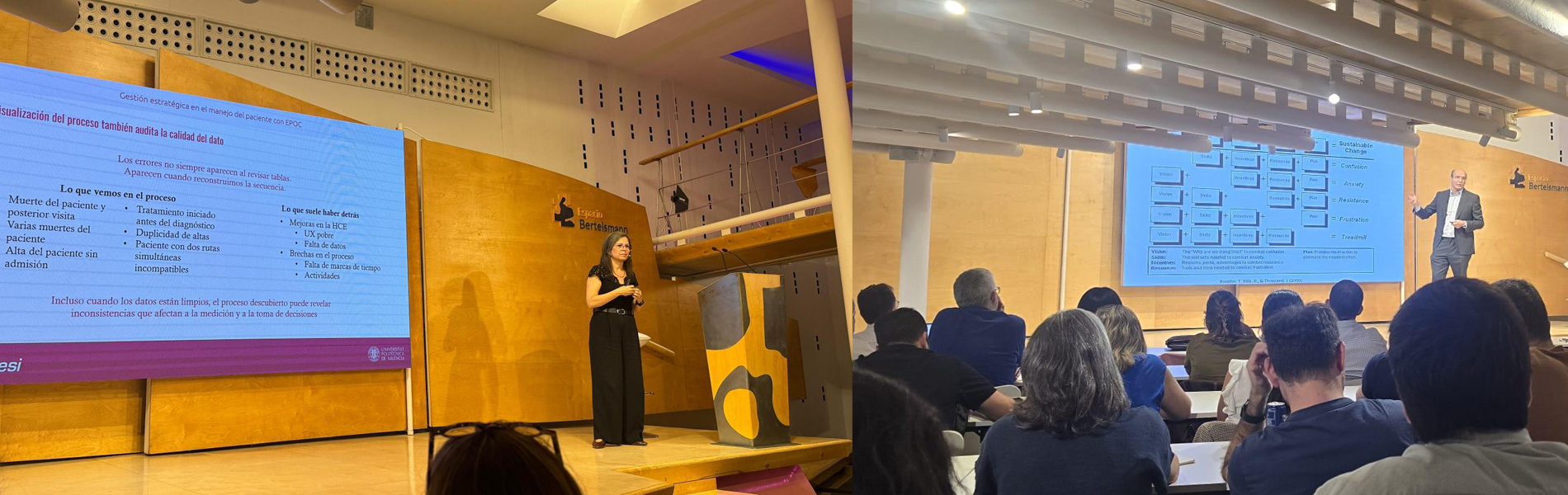
Vicente Traver and Gema Ibáñez, SABIEN-ITACA researchers, took part in the second edition of the “Gestión Estratégica en el Manejo del Paciente con EPOC» course, held in Madrid on 17 and 18 September. The train was aimed at healthcare professionals who work with people living with chronic obstructive pulmonary disease (COPD).
Vicente Traver delivered a session on “Value-Based Healthcare (VBHC) methodology” and joined the closing panel discussion. Gema Ibáñez contributed to the session “Introduction to Artificial Intelligence in COPD: practical tools and simulation with Claude”, alongside Marc Romeu Ferràs and Marta Muñoz Domingo.

Their participation provided an opportunity to share knowledge on healthcare management methods and emerging artificial intelligence tools with clinical professionals. Initiatives like this encourage exchange between academia, healthcare and industry, and bring innovative approaches closer to the challenges of COPD (Chronic Obstructive Pulmonary Disease) care.
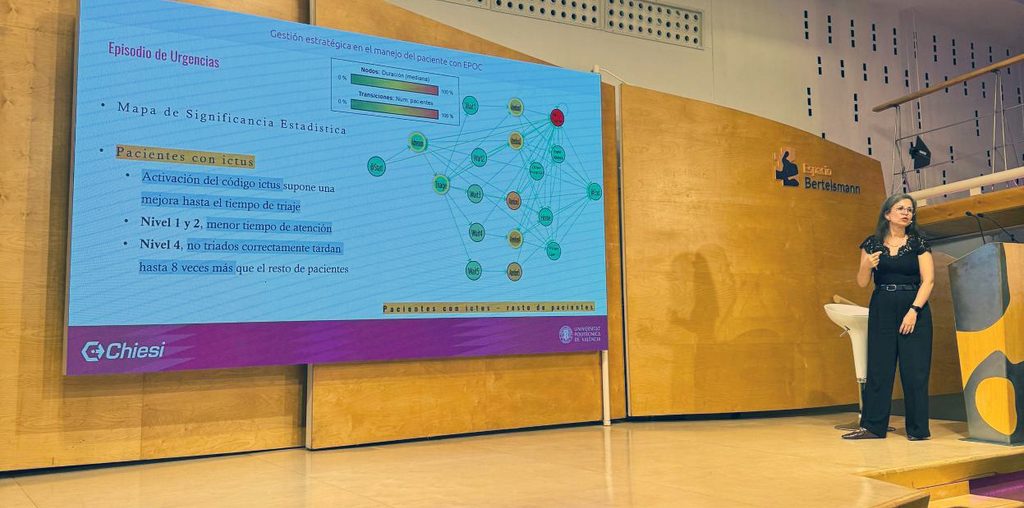
The course is the result of a collaboration between the UPV Centre for Research in Health Economics and Management (CIEGS), directed by David Vivas Consuelo, and the pharmaceutical group Chiesi.