


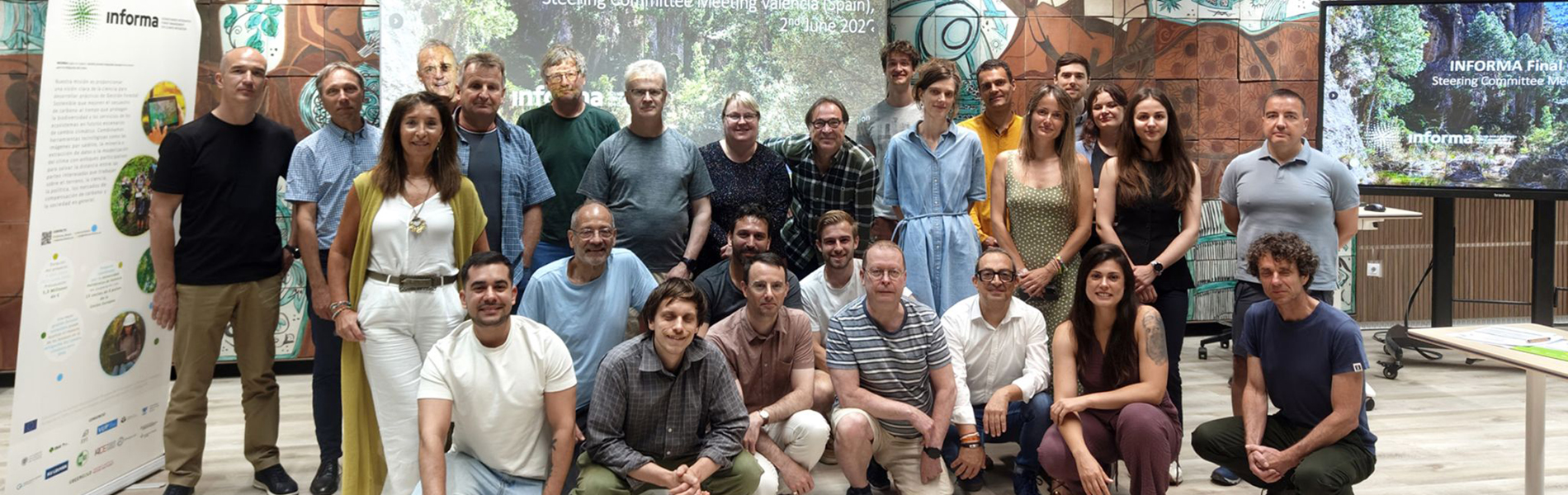
The European INFORMA FORESTS project, coordinated by ITACA-UPV, concludes that species diversification, sustainable forest management, and support for forest owners and managers are essential to tackle droughts, wildfires and extreme events.
“There is no single solution capable of ensuring the adaptation of all European forests to climate change. The way forward is to implement strategies tailored to each territory, based on scientific knowledge and adapted to the ecological, climatic and socio-economic characteristics of each region”.
This is the main conclusion of the European INFORMA FORESTS project, coordinated by the ITACA Institute of the Universitat Politècnica de València (UPV). Over four years, the project has worked across five European biogeographical regions to analyse how to increase the resilience of forest ecosystems to increasingly severe threats, including prolonged droughts, large wildfires, pests and extreme weather events.
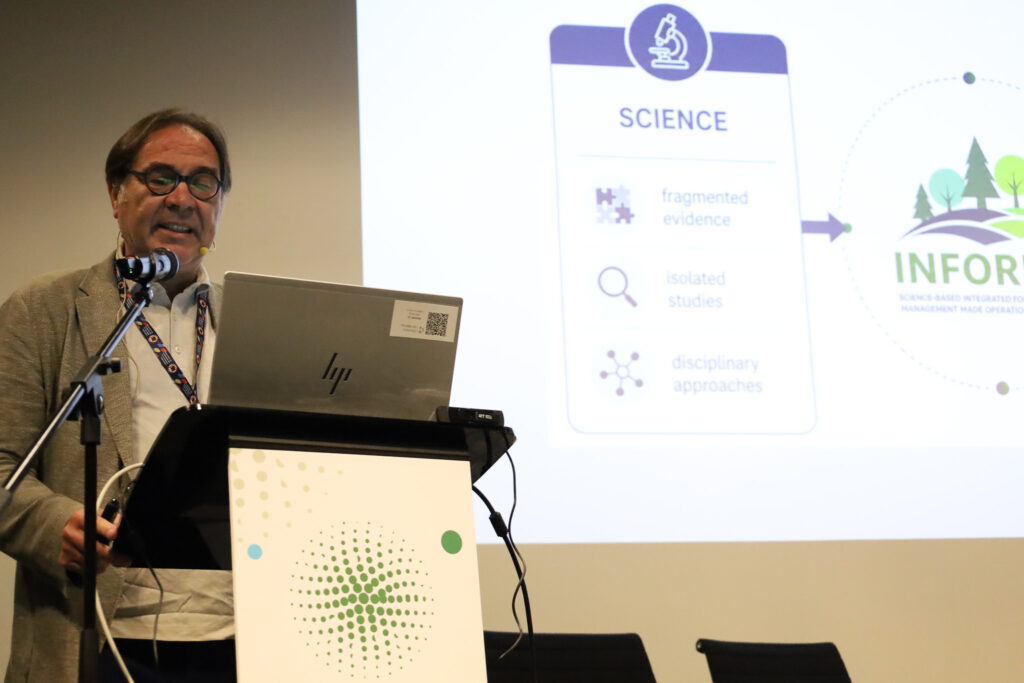
“The results of INFORMA show that adapting Europe’s forests requires a combination of solutions suited to the characteristics of each region. Sustainable forest management grounded in scientific knowledge will be essential to maintaining resilient forests capable of continuing to sequester carbon, ensuring water availability, preserving biodiversity and contributing to societal well-being in the context of climate change», explains José-Vicente Oliver, ITACA researcher and project coordinator.
Key findings
The research also highlights that forest policies aimed at mitigating climate change cannot focus solely on maximising carbon storage.
“Forest management must balance multiple objectives: carbon sequestration, biodiversity conservation, water availability, the sustainable production of forest resources and the ability to adapt to future disturbances”, says Eduardo Rojas, an ITACA researcher involved in the project.
Among the measures analysed, forest species diversification stands out as one of the most effective adaptation strategies. The results show that mixed forests have a greater capacity to withstand droughts, wildfires, pests and other extreme events than forest stands dominated by a single species.
The researchers also call for stronger support mechanisms for forest owners and managers through stable regulatory frameworks, adequate funding and compensation schemes for the ecosystem services provided by forests.
In this context, the project has analysed the potential of instruments such as voluntary carbon markets and forest certification schemes to promote sustainable management, provided that they are underpinned by robust and transparent scientific methodologies.
The study also warns of the expected increase in extreme wildfires across Europe and stresses the need to strengthen prevention policies and active land management.
“The best way to extinguish a major wildfire is to prevent it from occurring in the first place. Prevention and sustainable forest management will be essential tools for Europe’s climate adaptation,” says Marta Esteve, an ITACA researcher involved in the project.
About INFORMA Forests
The European INFORMA Forests project (Science-based integrated forest mitigation management made operational for Europe) has been coordinated by the ICT Research Group against Climate Change at the ITACA Institute of the Universitat Politècnica de València (UPV).