



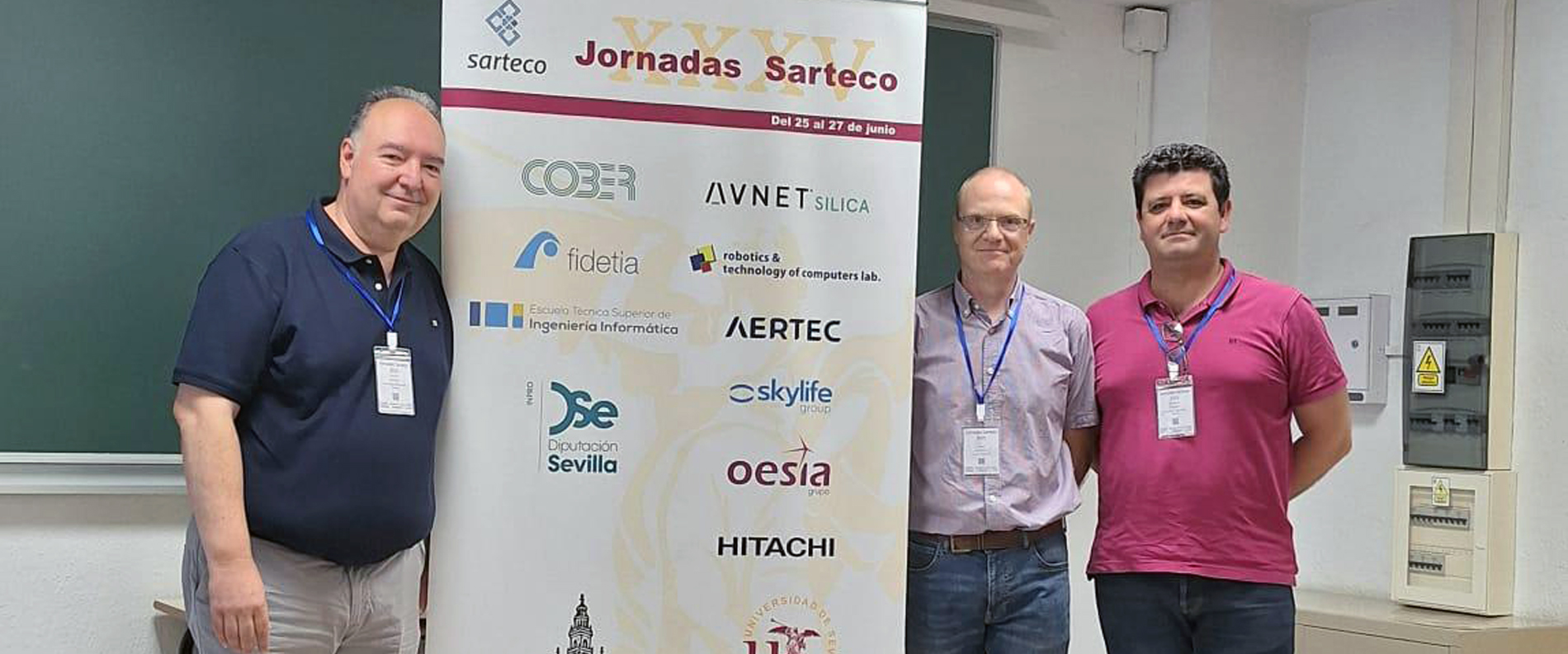
The Fault Tolerant Systems research group from the ITACA Institute at the Universitat Politècnica de València actively participated in the SARTECO 2025 Conference, held in Seville from 25 to 27 June.
This event, organised by the Spanish Society of Computer Architecture and Technology (SARTECO), brought together academic and scientific experts to discuss the latest advances in high-performance computing.
“These conferences foster collaboration and synergies between research groups, while also increasing our community’s visibility and enhancing our chances of transferring technological developments to industry”, said ITACA researchers.
Three oral presentations
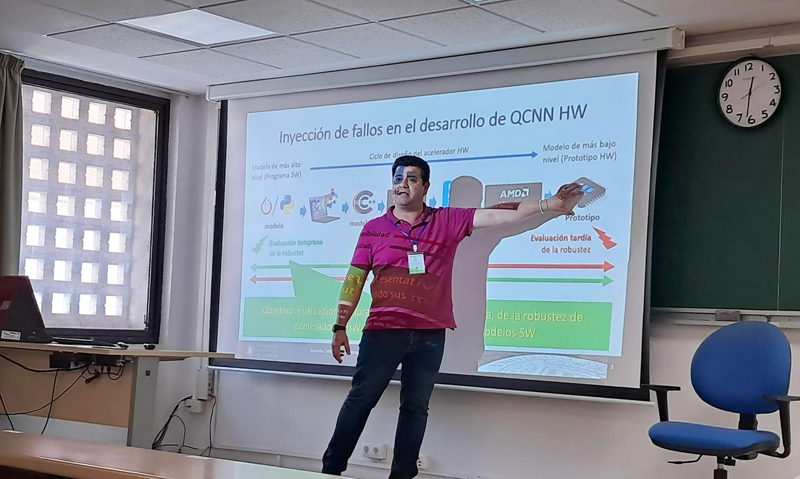
During the conference, Joaquín Gracia Morán, Luis-J. Saiz Adalid and Juan Carlos Ruiz delivered several oral presentations focusing on the development of more reliable, robust, and adaptable neural networks for critical environments.
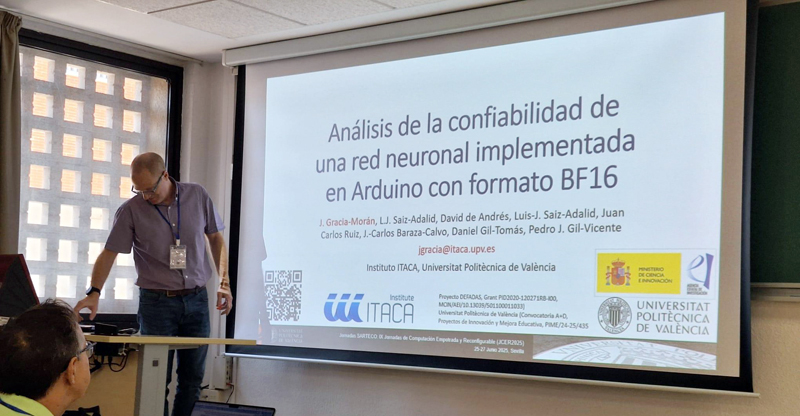
“We presented our advances aimed at improving the dependability of neural networks. We also shared some intelligent fault-tolerance strategies that allow these systems to continue operating correctly in critical contexts such as the automotive or industrial sectors”, noted the Fault Tolerant Systems research group.
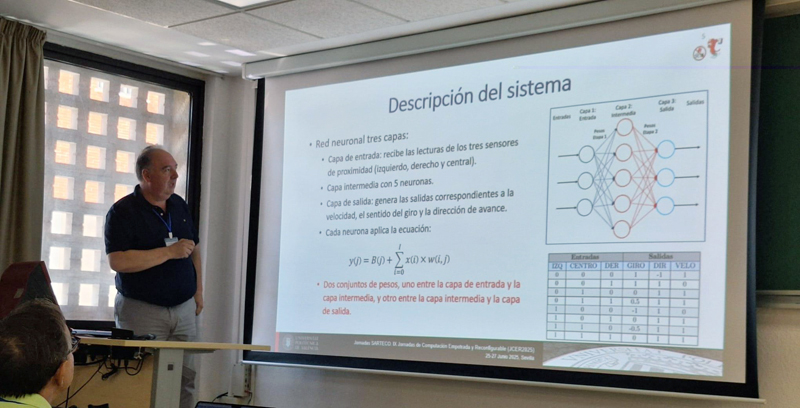
This work is part of the DEFADAS project, which focuses on developing FPGA-accelerated neural networks with sufficient reliability for critical applications such as automotive systems. It is also linked to the UPV educational innovation project (PIME/24-25/435), which aims to enhance engineering education through practical experiences with fault-tolerant systems.
Through its involvement, the ITACA Institute’s group reaffirms its commitment to cutting-edge research and to developing secure, robust solutions for integration into real-world, high-impact systems.
Noticia elaborada por ITACA FORWARD, financiada por Ivace+i Innovación y la Unión Europea a través del Programa Fondo Europeo de Desarrollo Regional (FEDER) Comunitat Valenciana 2021-2027 (Referencia del proyecto: INNVA2/2025/17)
