




Researchers from the SABIEN group at the ITACA Institute of the Universitat Politècnica de València, in collaboration with various organizations, have developed a new tool to estimate the risk of using medicines while driving.
The work, led by Vicente Traver and Salvador Borja and published in the scientific journal Therapeutic Advances in Drug Safety, introduces the FMB scale (Mobility and Risk Base Factor), a continuous and multifactorial model that improves the traditional assessment based on the DRUID system (Driving under the Influence of Drugs, Alcohol and Medicines), currently the most widely used reference system in Europe.
The research stems from a well-established reality: certain pharmaceutical treatments may impair driving ability and become a significant factor in road safety.
“Many medicines can cause drowsiness, dizziness or loss of concentration. However, information about these effects is often scattered and not always easy to interpret”, explains Salvador Borja Ripoll, lead author of the study.
Until now, the DRUID system has classified medicines into broad categories and presents limitations in terms of reproducibility, clinical applicability and the ability to distinguish between medicines with similar profiles.
New proposal: the FMB scale
To address these limitations, ITACA researchers have developed the FMB scale, a qualitative tool that systematically integrates key driving-related variables such as adverse effects, their frequency, dosage, treatment phase and pharmaceutical form.
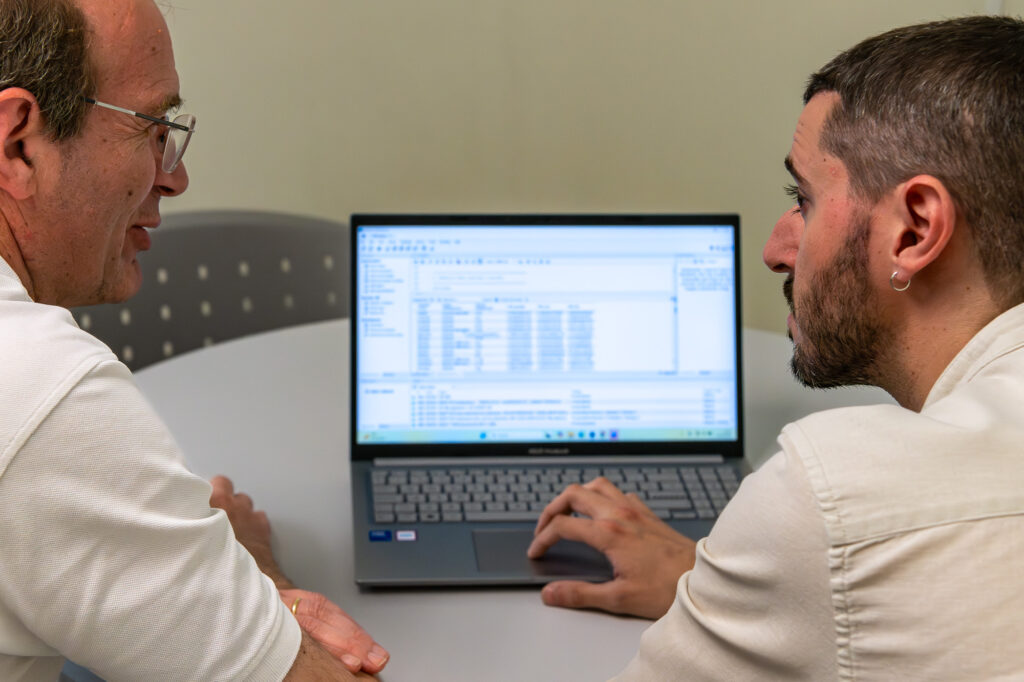
“The aim is to provide clearer and more useful information for both healthcare professionals and patients. Instead of assigning only a category, the scale combines different factors to generate a continuous index that more accurately reflects risk under real conditions of use”, explains Vicente Traver, head of the SABIEN-ITACA group and co-author of the research.
The results show that the scale reproduces the qualitative classification of the DRUID system while providing greater resolution within each category, making it easier to identify relevant differences between medicines and improving assessment in situations close to risk thresholds.
Specifically, the findings show that the scale reproduces the qualitative classification of the DRUID system, identifies significant differences between medicines within the same category, and improves assessment near risk thresholds.
“This scale allows for more precise differentiation between medicines which, although they may share the same category, do not have the same impact on driving. In addition, it transforms complex information into a clear and practical indicator, facilitating clinical decision-making and improving communication of risk between healthcare professionals and patients,” adds Vicente Traver, Professor of Electronic Technology.
Added value of the new research tool
Looking ahead, this tool could be integrated into mobile applications, electronic prescription systems or pharmacy software programmes, helping to support more informed decision-making and strengthen road safety.
Researchers from SABIEN-ITACA highlight that this work represents a methodological advance in the assessment of pharmaceutical risk while driving, by incorporating a structured, transparent and reproducible approach that can contribute both to improving clinical practice and to the development of evidence-based road safety strategies.
Finally, the ITACA researchers wished to pay special tribute to Ferran Mocholí, a researcher at the institute who passed away several years ago, whose vision and initial proposal were decisive in inspiring this work.
“Ferran was a brilliant person deeply committed to research. Some of the lines of work we continue to develop today originated from his ability to anticipate challenges and propose new solutions”, they conclude.
Reference
Salvador Borja Ripoll, Vicente Traver, Lola Franco, Teresa Ballester, Úrsula Alvado, Rosa Soriano, Pablo Garate, Ferran Mocholí. The FMB scale: a multifactorial metric to assess the driving hazard of medicines beyond the DRUID system. Therapeutic Advances in Drug Safety. Sage Journals. DOI: https://doi.org/10.1177/20420986261430228